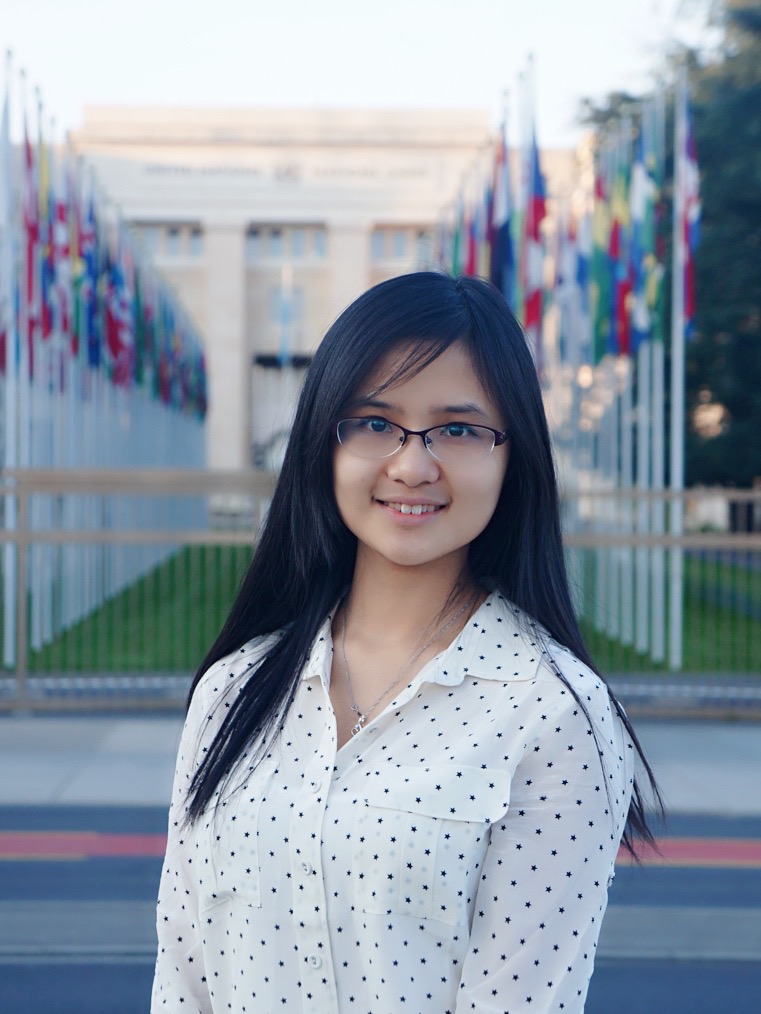
I am an interdisciplinary population health scientist and demographer working at the intersection of epidemiology and data science. I am currently a Postdoctoral Fellow at the Institute for Population Research at The Ohio State University.
My research follows the path from a health event to a report, a record, a classification, and ultimately a population estimate. I examine where information is lost or distorted, develop methods to improve measurement and inference, and build software and data infrastructure so those methods can be evaluated and reused. My training spans preventive medicine, public health, sociology, demography, and statistics; my work includes research in resource-limited settings across sub-Saharan Africa and Asia as well as domestic population health research in the United States.
Profile Highlights
Current Research Themes
My research program addresses a practical public-health problem: populations most affected by preventable mortality are often those for whom routine data are least complete. I study where information is lost or distorted, how measurement systems can be validated and improved, and how population quantities can still be estimated. This agenda has three connected themes:
- Measurement, Reporting, and Data Quality How respondents, interviewers, instruments, collection modes, and institutions shape what population-health data capture, omit, and misclassify.
- Mortality Measurement, Validation, and Health Information Systems How mortality-measurement tools can be validated, monitored, and integrated into routine surveillance and civil-registration systems.
- Demographic Inference Under Incomplete and Misclassified Data How fertility, mortality, and cause-of-death patterns can be estimated when events are incompletely observed, selectively reported, or imperfectly classified.
Together, these themes connect applied population-health and demographic research, statistical and computational methods, and research software and data infrastructure. I build infrastructure when answering a research question requires data and methods to remain usable beyond a single analysis.
Research Keywords
- Substantive
- Demography; population health; epidemiology; mortality; maternal, child, and adolescent health; verbal autopsy; civil registration and vital statistics; resource-limited settings.
- Methods
- Bayesian hierarchical models; demographic estimation; survey validation; measurement error; evidence synthesis; natural language processing; machine learning; multimodal learning; large language models.
- Data science & delivery
- R, Python, Julia, SQL, and Stata; reproducible pipelines; data integration and harmonization; metadata and DDI; APIs; ODK; secure analytics environments.
Selected Current and Recent Work
2026
Information sufficiency in population surveys
Identifies which parts of verbal-autopsy interviews preserve the evidence needed for reliable cause-of-death inference, creating a basis for shorter and adaptive instruments while testing whether efficiency introduces new measurement error.
2026
Multimodal AI for cause-of-death assignment
Benchmarks narrative-only, symptom-indicator, multimodal, and large-language-model approaches using national South African data, with an open-source workflow for reproducible evaluation.
In preparation
SBH-Bayes: joint estimation from summary birth histories
Extends a Bayesian framework co-conceived with Samuel Clark into an independently developed model that jointly estimates fertility and child mortality from compressed birth-history data.
Contact
- University email: chu.282@osu.edu
- Personal email: ychu612@gmail.com